Call us now :07971258680
 Send Inquiry
DM Water plant
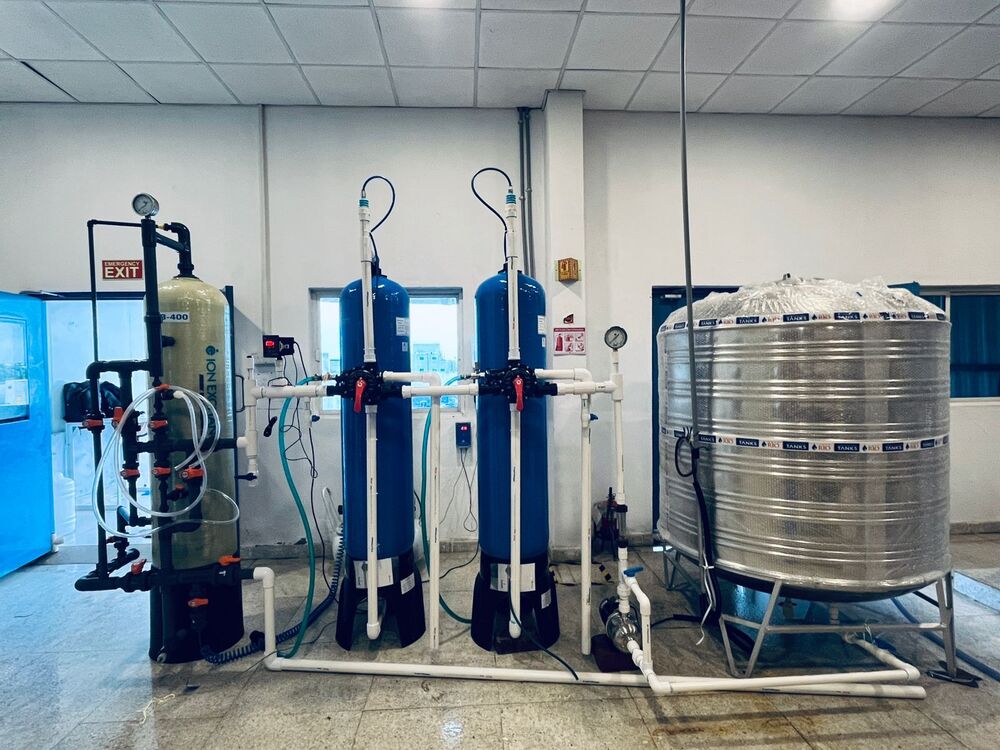

DM Water plant Specification
- Noise Level
- <60 dB
- Technology
- Ion Exchange
- Water in conductivity
- 200-1000 S/cm (typical)
- Water Out Conductivity
- <1 S/cm
- Ph Level
- 6.5-7.5
- Frequency
- 50/60 Hz
- Pump Type
- Centrifugal/Multistage pump
- Usage & Applications
- Pharmaceutical, laboratory, boiler feed, industries
- Feature
- High efficiency, corrosion resistant, low maintenance
- Recycle Rate
- Up to 95%
- Efficiency (%)
- 90-99%
- Flow Rate
- 250-5000 LPH
- Power Consumption
- 1-3 kW (varies by model)
- Automatic Grade
- Semi-automatic/Automatic
- Purity Level
- Up to 99.9%
- Water Source
- Borewell, municipal, industrial supply
- Power Source
- Electric
- Material
- Stainless Steel/FRP
- Voltage
- 220-240 V
- Drive Type
- Electric motor
- Product Type
- DM Water Plant
- Volume
- Customizable, standard 500-5000 L
- Filter Type
- Multi-grade, activated carbon, micron filter
- Capacity
- 250 LPH to 5000 LPH
- Installation Type
- Floor mount
- Service Life
- 10-15 Years (with regular maintenance)
- Safety Features
- Automatic power cut-off, pressure relief valves
- Piping Material
- UPVC/SS316L
- Control Panel
- Microprocessor based/Digital
- Resin Type
- Cation and Anion Exchange Resin
- Skid Mounting
- Available
- Pre-treatment
- Softener, Pre-filtration unit
- Inlet Pressure
- 1-5 kg/cm2
- Display Type
- Analog/Digital conductivity meter
- Regeneration Method
- Manual/Automatic
- Design Pressure
- 3-7 Bar
DM Water plant Trade Information
- Minimum Order Quantity
- 1 Unit
- Supply Ability
- 50 Units Per Month
- Delivery Time
- 7 Days
- Main Export Market(s)
- Asia
- Main Domestic Market
- South India
DM Water plant About
A DM plant (demineralization plant) is an industrial water treatment system that removes dissolved minerals and salts from water, producing highly purified, demineralized water. It works by passing water through ion-exchange beds that replace positively charged cations and negatively charged anions with hydrogen and hydroxide ions, respectively, resulting in mineral-free water. DM plants are crucial for various industries where water purity is essential, preventing scale and deposits in equipment.Superior Water Purity and Versatility
This DM Water Plant ensures the highest levels of water purity with dual cation and anion exchange resins and pre-filtration units, delivering water with conductivity as low as <1 S/cm. Applications span from laboratories to industrial boiler feeds, making it a versatile solution for a wide array of industries and processes.
User-focused Design and Safety
Ease of operation and safety are central to the system's design. With digital and microprocessor-based control panels, automatic and manual regeneration modes, and features such as automatic power cut-off and pressure relief valves, users can expect reliable, safe, and efficient operation over a 10-15 year service life.
Robust Construction and Low Maintenance
Constructed from corrosion-resistant UPVC or SS316L with stainless steel or FRP materials, this plant is designed for longevity and easy upkeep. Its modular skid-mounted structure allows straightforward installation and scalability, while minimal noise and low power consumption enhance its suitability for pristine environments.
FAQ's of DM Water plant:
Q: How does the DM Water Plant achieve high water purity?
A: The plant uses a combination of cation and anion exchange resins along with pre-filtration units like softeners and activated carbon filters to remove dissolved ions and contaminants. This results in purified water with conductivity below 1 S/cm, suitable for high-demand applications.Q: What is the typical process flow in this DM Water Plant?
A: Raw water first passes through pre-filtration units and a softener to remove suspended particles and hardness. Next, it flows through cation and anion resins where remaining dissolved ions are exchanged, followed by final polishing. Multiple filters and digital conductivity meters monitor quality throughout the process.Q: When should I choose manual versus automatic regeneration?
A: Manual regeneration is suited to facilities with lower water demand or where operational control is preferred. Automatic regeneration is ideal for continuous operation or larger volumes, ensuring consistent water quality and reducing operator intervention.Q: Where is this DM Water Plant typically installed?
A: With its floor or skid-mounted design, the system is commonly installed in laboratories, pharmaceuticals, industrial facilities, and boiler rooms where pure water is essential for processes or analysis. Its modular nature allows for customized placement based on site requirements.Q: What type of water sources can be used with this DM Water Plant?
A: The plant can handle various water sources, including municipal supply, borewell water, or industrial feed. Pre-filtration addresses the specific characteristics of each source, ensuring consistent output quality.Q: How does regular maintenance impact service life?
A: Scheduled maintenance, including timely resin regeneration, cleaning, and filter replacement, extends the plant's service life to 10-15 years. This minimizes downtime and ensures optimal efficiency over the long term.Q: What are the key benefits of using this DM Water Plant?
A: Key benefits include high purification efficiency (up to 99.9% purity), robust construction with corrosion resistance, low operational noise, customizable capacity, energy-efficient operation, and enhanced safety features, making it a reliable choice for diverse industrial and laboratory uses.Tell us about your requirement

Price:
Quantity
Select Unit
- 50
- 100
- 200
- 250
- 500
- 1000+
Additional detail
Mobile number
Email

More Products in Deionization System Category
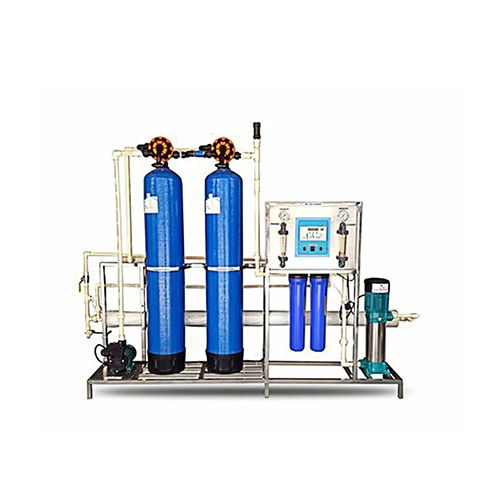
Water Deionization System
Price 35000 INR / Unit
Minimum Order Quantity : 1 Unit
Voltage : 240 Volt (v)
Material : Stainless Steel
Water Source : Borewell Water, Other
Automatic Grade : Semi Automatic


 Send Inquiry
Our Products
- Water Treatment Plant
- Sewage Treatment Plant
- Water Softening Plant
- Effluents Treatments Plant
- Water Purification System
- Wastewater Treatment Plant
- Demineralisation Plant
- Deionization System
- Annual Maintenance Contract Services
- Sludge Dewatering Machine
- Water Distribution System
- Distilled Water Supply Services
- Operation And Maintenance Services
- RO Membrane
- Activated Carbon Filter
- Air Blower
- Water Storage Tank
- ETP Operation Maintenance Services
- Water Filter Parts


No.1-1-110/1/31, Ramdas Nagar, Medchal Malkajgiri, Jeedimetla,Hyderabad - 500062, Telangana, India

Mr Akshara R
(Marketing Head)
Mobile :07971258680
 Send Inquiry
 Send SMS
 Call Me Free
Developed and Managed by Infocom Network Private Limited.


